
How We Select
Selection at WAYFARER begins with clear coffee selection criteria.
It is not about finding the rarest name
or the most impressive story.
It is about how coffee is selected when it still
makes sense after arrival — in quality,
timing, logistics, and real café use.
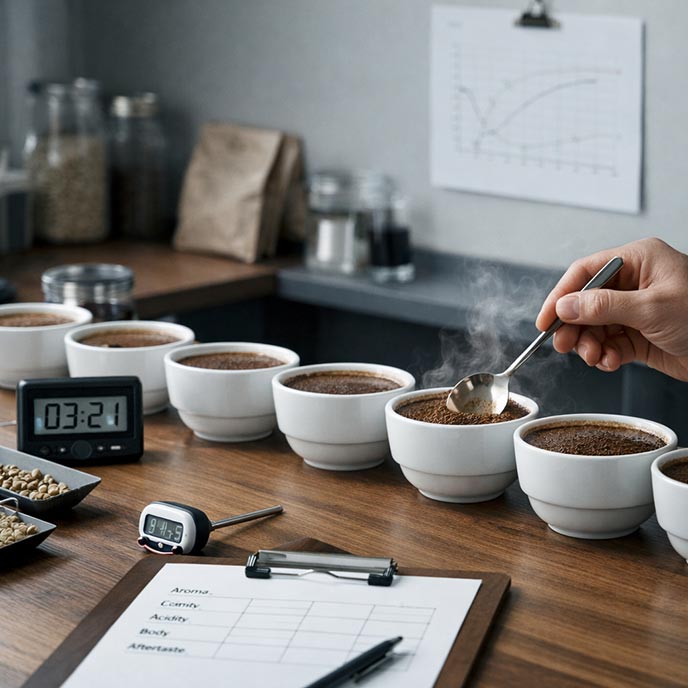
Reality first, always
Before we commit to an origin, we ask a simple question:
Does this coffee still make sense in reality — not only in taste, but in delivery, communication, and café use?
We look at:
- Quality stability
- Processing reliability
- Logistics feasibility
- Communication clarity
These are not abstract preferences. They are the coffee sourcing standards behind every decision.
A coffee may taste good and still not be selected. If the surrounding conditions are unstable, the risk moves downstream to the café.
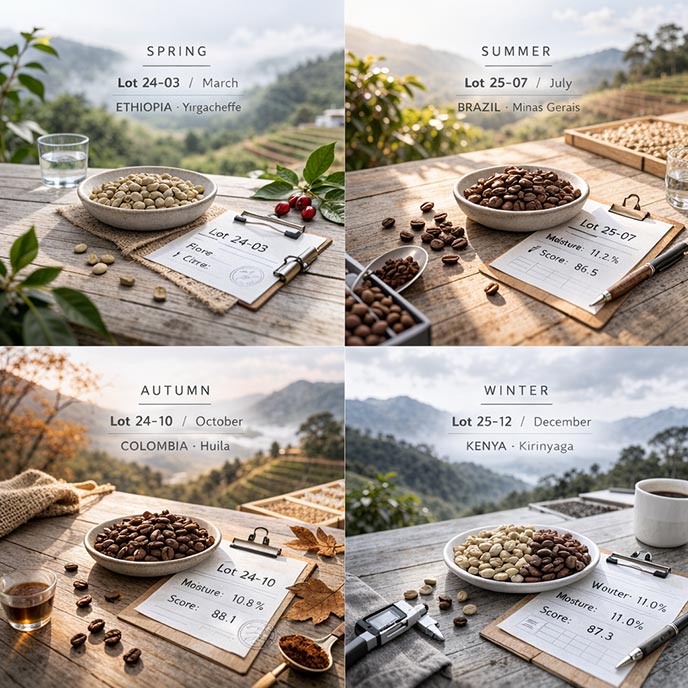
Seasonal decisions, not permanent labels
WAYFARER does not lock coffees into permanent status.
Every selection reflects:
- a specific season
- a specific harvest window
- a specific set of conditions
- a specific level of availability
This is also how we approach coffee lot selection — each lot is judged in its real season, not as a fixed label.
When the season changes, our decisions may change too.
This is not inconsistency.
It is respect for agriculture, timing, and reality.
If it can’t be explained, we don’t select it
Every coffee we work with must be explainable in clear, honest language.
Not tasting-note language for competitions — real language that helps cafés understand why this coffee is here, now.
In specialty coffee selection, We should be able to explain:
- Why this origin, this season
- Why this lot, not another
- Why this processing method
- Why it fits the current sourcing window
If we cannot explain the decision simply, we do not source it.

Risk is part of selection
We do not ignore risk in order to protect a cleaner story.
Weather, yield, processing pace, transport timing, and communication reliability all affect whether a coffee should be selected.
A coffee can be attractive and still not be right for the cafés we serve.
Selection is not about choosing what looks best.
It is about choosing what can be carried responsibly.
What this means for cafés
Selection at WAYFARER is designed to reduce surprises — not eliminate change.
Cafés working with us can expect:
- Clearer context
- More honest availability
- Better communication around change
- Selection decisions grounded in real conditions
They should not expect:
- Fixed origins forever
- Endless uniformity
- Certainty without explanation
Good selection does not remove reality.
It helps cafés work with it more clearly. → See how we work with cafés
See what selection
looks like in practice
The best way to understand WAYFARER’s coffee selection criteria is to see the origins currently in motion — not abstract promises, but real sourcing decisions.